
I, Robot by Isaak Asimov_Introduction
Dear readers, now we are going to publish chapters I, Robot by Issak Asimov with comprehension and language exercises. They are illustrated by a young talented artist Daria Buffet from Yalta. The aim of her paintings is to create the world of love and kindness.
Read the Introduction to the story and complete the following exercises:.JPG)
Vocabulary:
hectic – беспокойный, лихорадочный
destined – предназначенный
projected – планируемый
stirrings – волнение
relay – реле
platinum – платина
iridium – иридий
variables – переменные
lushly – напыщенно
occiput – затылок
to hackney – говорить банальности
gears – шестеренки
breed – племя, порода
to nudge – подталкивать
verbatim – дословно
to dismantle – демонтировать
blasphemers – богохульники
Task 1. Say if the statements are true or false. Expand on the true and correct the false ones.
1. The events described in Introduction take place in 2020.
2. U.S. Robots was founded in 1992.
2. U.S. Robots was founded in 1992.
3. Susan Calvin demonstrated the first robot with voice at Psycho-Math seminar.
4. Dr. Alfred Lanning’s robot was supposed to be used on the Earth mines.
5. Robot psychologist was a pioneer job in 2008.
6. Dr. Calvin likes robots more than human beings.
7. Interplanetary Press is read in the entire Solar System.
7. Interplanetary Press is read in the entire Solar System.
8. The author uses a special pocket computer to record Dr. Calvin’s story.
9. Robbie was the first robot that could speak.
10. Robbie was the first robot sold as a nurse.
Task 2. Answer the questions.
1. When and where does the action take place?
2. Who is Susan Calvin?
3. What is her bio?
4. Who is Alfred Lanning?
5. What is the story of U.S Robots?
6. How does the author describe the buildings of U.S Robots?
7. What is the difference between the world without robots and with them (according to Dr. Calvin)?
Task 3. Match the adjectives with their definitions.
1) hectic
|
g) marked with irritation or anger
|
2) clumsy
|
m) no longer useful or acceptable, not modern or current
|
3) frosty
|
f) exactly the same
|
4) plain
|
l) extremely silly and unreasonable
|
5) spongy
|
j) having and showing true and constant support and loyalty
|
6) identical
|
h) easy to notice or understand
|
7) sharp
|
c) cold and unfriendly
|
8) transparent
|
a) characterized by activity, excitement, or confusion
|
9) frail
|
k) relating to a belief or way of behaving that is based on fear of the unknown and faith in magic or luck
|
10) faithful
|
e) soft, elastic and full of cavities
|
11) superstitious
|
b) moving and doing things in a very bad or awkward way and tending to drop or break things
|
12) ridiculous
|
d) having no decoration
|
13) out-of-date
|
i) easily damaged or destroyed
|
Task 4. The author uses these adjectives to describe Susan Calvin, mankind, robots. Find them in the text and organize into three groups.
Adjectives: frosty, large, frail, clumsy, alone, not angry, colorless, superstitious, faithful, unbeautiful, plain, great, sharp, strong, useful, devoted, human, ridiculous
Susan Calvin
|
Mankind
|
Robots
|
Victim of Books
If you are a victim of books as well, just comment in the comment box about your favourites.


Character Organizer – keeping track of the characters
Character Organizer – keeping track of the characters
Story ___________________________________
Character’s Name
|
Physical
Description
|
Personality/Qualities
|
Role in the Story
(Circle Major or Minor)
|
Important Quote
|
Major Minor
|
||||
Major Minor
|
Printable table

Reading Comprehension Strategies
|
Make Connections
What connections do I make as I read?
Good readers
notice pieces of
text that relate to or remind them of:
·
Their lives,
past experiences, and prior knowledge
·
Other books,
articles, movies, songs, or pieces of writing
·
Events,
people, or issues
Tips:
·
That reminds
me of…
·
This made me
think of…
·
I read another
book that…
·
This is
different from…
·
I remember
when…
|
Visualize
Good readers
create pictures in their minds while they read.
While reading, note places where you get a clear picture in your mind
that helps you understand the text:
·
I can picture…
·
I can see the…
·
I can
visualize…
·
The movie in
my head shows…
·
Use your
senses to connect the characters, events, and ideas to clarify the picture in
your head.
·
I can
taste/hear/smell the…
· I can feel the…
|
Ask Questions
Good readers ask questions before, during, and after reading to better
understand the author and the meaning of the text.
Ask questions of the author, yourself, and the text:
·
What is the
author trying to say?
·
What is the
message of this piece?
·
Do I know
something about this topic?
·
What do I
think I will learn from this text?
·
How could this
be explained to someone else?
·
What
predictions do I have about this reading?
|
|
Infer
How do I read between the lines?
When the answers are “right there,” good readers draw conclusions
based on background knowledge and clues in the text.
Ask yourself:
·
I wonder why…
·
I wonder how…
·
I wonder if…
·
Find
information from the text that might be clues to the answers and use these
with your background knowledge for possible answers.
|
Determine Importance
What’s the big idea?
So what?
Good readers
look for things that help them identify big ideas and why they are important.
Look at text
features for clues:
Titles and
headings
·
Bold print
·
Pictures and
captions
·
Graphs and
charts
·
Chapter
objectives and questions
Tips:
·
The big idea
is…
·
Most important
information is...
·
So far I’ve
learned…
·
The author is
saying…
·
This idea is
similar to…
|
Synthesize
How do I use what I’ve read to create my own ideas?
Good readers combine new information from their reading with existing
knowledge in order to form new ideas or interpretations.
Synthesis is creating a single understanding from a variety of sources.
Tips:
·
Compare and
contrast what I’m reading with what I already know or other sources of
information.
·
Think of new
ways to use this information.
·
Can
connections I make across this text help me to create new generalizations or new
perspectives?
|

The Book Is NOT Dead
In July 2010, Amazon announced that e-book sales outnumbered sales of
hardcover books for the first time. Amazon claims that, 180 e-books are being
sold for every 100 hardcover books, including hardcovers for which there is no
digital edition.
E-books are a great thing, one can take thousands of
books with them but without all the weight. But books still hold a lot of
charm. I cannot even imagine my home without my favourite hardcover books, and
they are everywhere: near my bed, in the kitchen, on the coffee table, …
Nothing can be compared with the joy they give me.
Which do you prefer: e-books or hardcovers? And why?
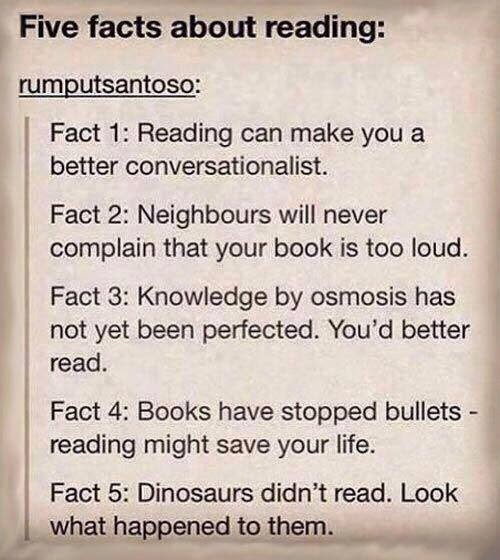
By the way, studying the poster can be rather interesting as well.

Subscribe to:
Posts (Atom)